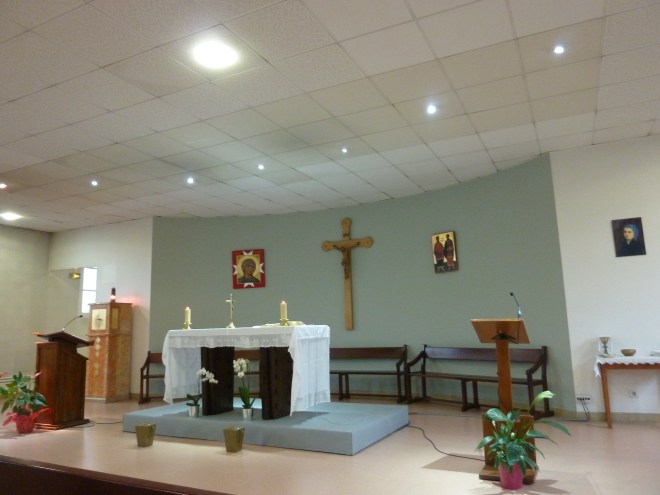
Anniversary of the Consecration of Our Lady& St Michael’s church.

On this day in 1921, the church of Our Lady& St Michael was solemnly consecrated in a splendid, elaborate and very long ceremony! My guess is that it would have lasted 3 to 4 hours. I believe in the rite before Vatican II, two pounds of incense was recommended for the service – marvellous. The feast is a solemnity and takes precedence over todays feast of the Triumph of the Cross.

In 1921, Fr Clement Standish purchased a number of consecration crosses, which are placed different parts of the church. They cost £3 in 1921, more than a weeks wages for many workers at the time. These candles are only it on the anniversary of the Consecration.
IMGP4091
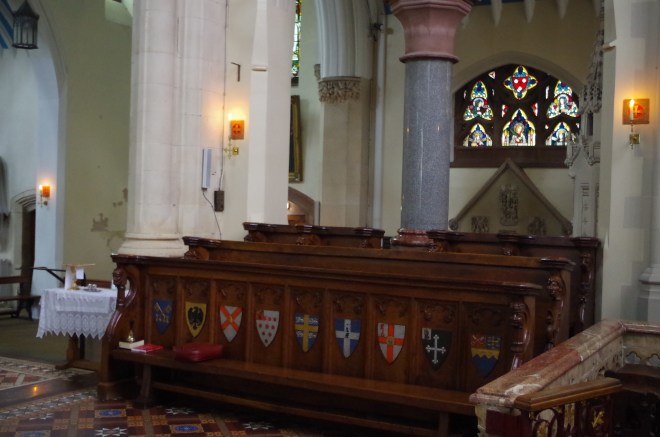
Consecration candles lit.

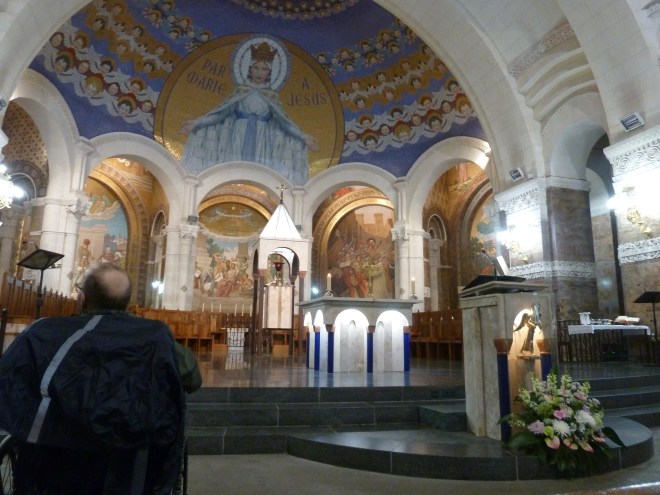
I chose this photo as it shows the lit candles, but also the choir stalls. These were commissioned for the consecration. They were made by Robert Thompson of Kilburn nr Ampleforth, later known as the mouse man. We know from the archives, that he had more than a hand in making them. The shields are of the medieval Benedictine Abbeys and Cathedrals in England.

Today’s feast also reminds us that the Church was built for worship, and this continues to carry on today and we hope for many years to come. We remember the countless men and women who came to this church for Mass, the sacraments or just to pray. We also remember all those who looked after the church especially those who kept it clean. May  they all rest in peace and receive the reward of their labours.
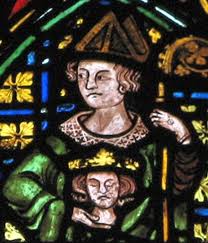
St Cuthbert

St Cuthbert
St Cuthbert

Today we keep the feast of St Cuthbert, who is also the secondary patron of my diocese in Lancaster.

He was born around the year 635AD probably near what is now Melrose. St Bede tells us he tended sheep, which indicates a humble background. After seeing a vision of St Aiden’s soul ascending to heaven (651AD) he entered Melrose monastry. However these were turbulent times and it seems he was recruited into one the local war lords armies and for a number of years was a soldier. After about 4 years or so he returned to the monastry. Shortly after that he went to Ripon as guest master. He returned to Melrose, where there was a plague, the prior died and Cuthbert took his place. In 661 after the synod of Whitby which adopted the Roman usage for  Easter and other matters, he was sent to LIndisfarne to help the monks there adopt to the new usage.  This his did through his holiness and gentle manner. He also spent times evangelising and catechising the local people. His devotion to celebrating Mass was such that it moved him to tears. Eventually he sought a more demanding and austere life and retired the one of the Farne islands. This did not last too long as he was persuaded to be Bishop of Lindisfarne. He was consecrated Bishop in 685. He died on March 20th 687.

As I mentioned above, he is a patron of my diocese. We ask his intercession at this time for our own Bishop.

St Gregory the Great,

Pope Gregory the Great
Pope St Gregory the Great.

Today is the feast of St Gregory the Great. He was born in Rome around the year 540AD into a wealthy Roman family. Most of their wealth came from land they held in Sicily. Although we know little of his early life, what we do know it was a time a turmoil. If Rome wasn’t at war then warfare was not far away.

Around the year 575 his father died and Gregory became a monk. Whether he followed the rule of St Benedict is hotly debated. He turned his family villa into a monastry. His manner of life was so renwoned that it drew the attention of Pope Pelagius II who around 585 sent him on a diplomatic mission to Constantinople. This Gregory did not like!. The nature of the mission need not detain us, but it ended in failure.

In 590 Pope Pelagius died and Gregory became Pope by popular acclamation. He was reluctant to accept, but saw it as God’s will. Once again it was a time of uncertainty, as warfare and violence were never far from Rome and its environs. His reign was fruitful in many ways

  • He was a missionary Pope. For example he sent one of the monks of his own monastry, St Augustine to England.
  • He made  some reforms of the Liturgy, eg moving the Our Father to its present place in the Mass, shortening the penitential rite. There is some evidence to suggest he introduced what is called Gregorian chant
  • He made sure the poor were fed and looked after. For example in the mid 590’s there was famine in Rome. He insisted that all the produce of the land owned by the church be brought to Rome to feed the starving. It was the clergy who organised it. It has also been said that this almost bankrupted the church in Rome!
  • He was also a great write. His Pastoral Rule on how Bishops and priests should live had an enormous influence on the Church.

He died in the year 604 and was immdiatly proclaimed a saint.

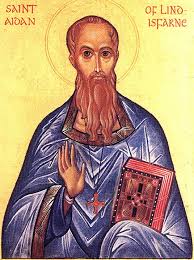
St Aidan of Lindisfarne

St Aidan
St Aidan

Today,  August 31st marks the feast of St Aiden. We know next to nothing about his early life apart from the fact he was from Ireland and was associated with the monks of Iona. We know from the writings of St Bede that he was a Bishop. Some scholars have suggested he may have been Bishop of Clogher in Ireland. What we do know is that about the year 630AD he moved to Lindisfarne and founded a monastry there. His reputation soon spread and he attracted followers and disciples. St Bede suggests that any money he received he have to the poor and to free slaves. Some of the latter became monks in his community.

In 635 he became Bishop of Lindisfarne. The local king, Oswald, was a new convert to Christianity and persuasded Aiden to go around and bring the faith to what in now Northhumberland. Again St Bede tells us that he was offered a horse, as befitted his dignity as a bishop. This he refused and went around on foot, winning many to the faith by his gentle preaching and manner. He died in 650 at Bamborough.

St Aiden pray for us.

Mass at the Grotto

Monday morning saw us at the Grotto for Mass. This took place at 8.30am. As we arrived the there was German Mass in progress. I think you can imagine our amusement when their final hymn was to the tune of Land of Hope and Glory!

P1490331
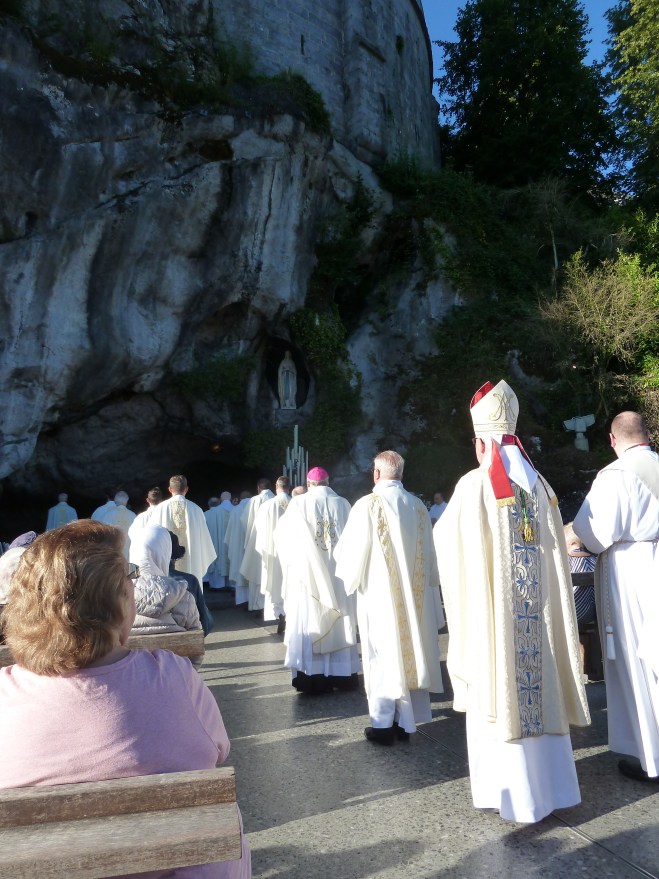
Entrance Procession,

The main celebrant was Bishop Mark Davis of the Diocese of Shrewsbury. For me, this Mass is always the highlight of the pilgrimage. It is the very spot were Our Lady appeared to Bernadette. It is both humbling and a privelege to be in the same place. I offered my Mass for the intentions of the parish of Christ the Good Shepherd, Workington.

P1490345
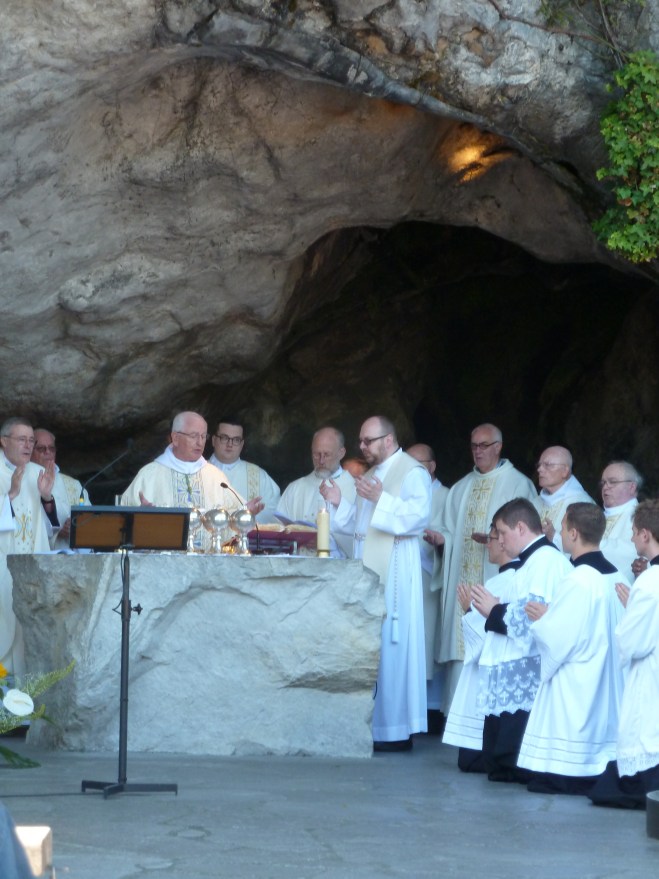
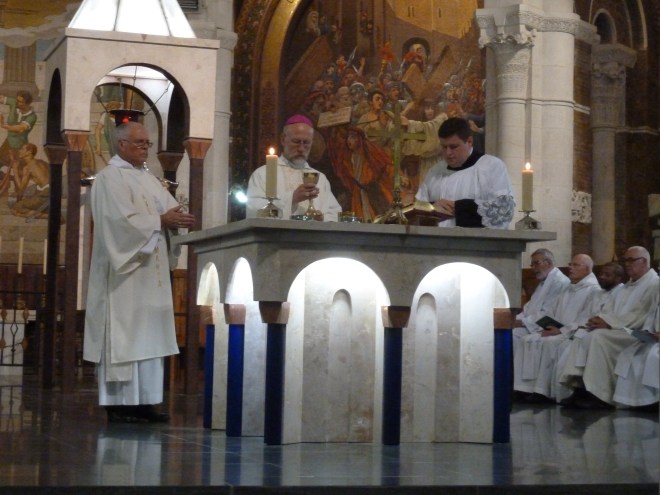
The Canon of the Mass.

The only draw back is the we are limited by time, one hour at the most. We were three pilgrimages combined, ourselves, the Diocese of Shrewsbury and the Welsh National. Despite that we managed well inside the hour. The music was good led by an excellent music group.

P1490356
Bishop Swarbrick giving Holy Communion

Once Mass was finished we were free for most of the day.

Sunday International Mass

P1490317
The underground basilica

Every Sunday in Lourdes, the main Mass is at 9.30am. This is called the International Mass, the name means what it says. I must admit that the Basilica of Pius X ( to give its correct title) is not too my taste. It is a product of the “brutalism” of the late 50’s and early 60’s. However, as a priest I do like the gathering of many nations to celebrate the one Mass. I really do feel part of the Universal Church.  The first reading was in French, the second in Spanish. The Gospel was read in English. The Bidding prayers we also had German, Italian and a couple from India and Sri Lanka.

As you can see below there was lots of  incense which is to my taste

P1490320

First full day in Lourdes

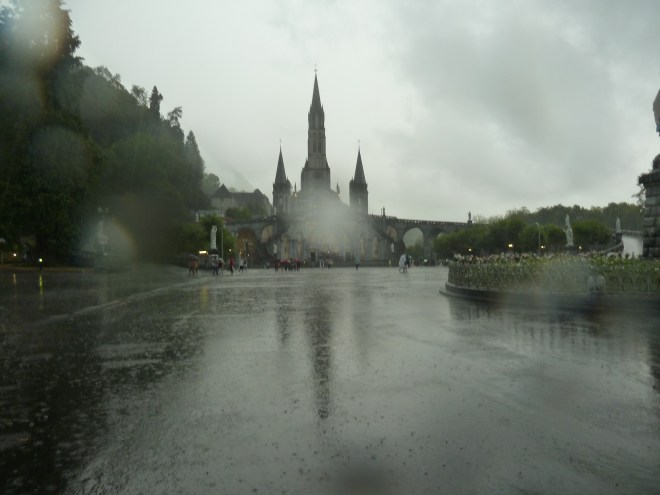
My first objective was to get a tooth brush!. This was soon achieved by virtue of a short walk into the main town of Lourdes. It was raining, in fact there was steady rain all day.

P1490293
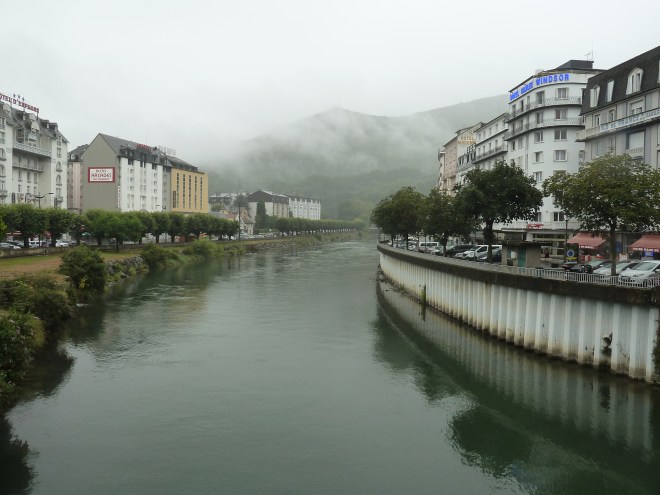
A wet morning in Lourdes.

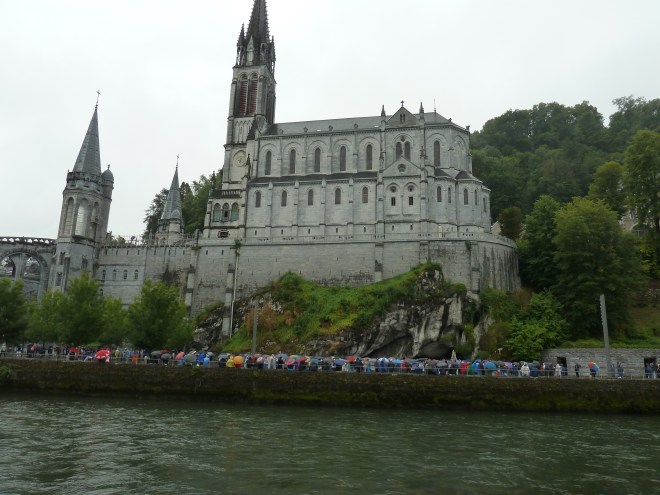
Despite the rain I walked down to the domain area in order to say a few prayers in the adoration chapel. Along the way I took a couple of photos of the grotto and main basilica. They looked splendid even in the rain.

P1490299
Grotto and basilica.

In the afternoon we had our opening Mass in the Rosary basilica. Whilst vesting in the sacristy I did notice lots of bricks whi bore the names of those who had had miracles in the past. A silent and moving testimony of faith. The Mass itself was lovely with a good sermon from the Bishop and some excellent singing  of hymns old and new.

P1490302
The Rosary Basilica before Mass.

P1490306

The journey to Lourdes

It was an early start in Manchester, the flight was a 8am, so check in from 6am onwards. There was a long queue for this, but eventually I got my boarding card. Going through security was a test of my patience, the queue’s were massive, so much so that I and other had to be moved foreward or we were in danger of missing the flight. What I could’t understand there were 3 security points unmanned. This is the busiest time of the year, you would have thought that someone would have known this…. Once through security I needed to buy a tooth brush as I had forgotten to pack one. I had a senior moment and bought toothpaste instead! The flight was uneventful apart from some turbulence as we approached Tarbes airport.

Once in my hotel, there was chance for a rest. We had a simple Mass in the chapel of Saints Cosmos and Damien. By that time we had a thunderstorm and torrential rain.

P1490280
A very wet start to the pilgrimage.

The chapel was simple, a bit too simple for my taste. It could also have done with a bit of TLC as well. Having said all that Mass was said and was a pleasing end to the day.

P1490284


The journey to Lourdes begins

I am joining the Diocesan pilgrimage to Lourdes. This began on Friday 26th July. However, as it was an early flight (8am from Manchester Airport) I decided the travel down by train the night before. This proved a little eventful that I planned.

I was due on the 14.50 direct service from Penrith to Manchester Airport. I wasn’t looking forward to this as my off peak ticket didnt have a seat reservation, and the Transpennine express trains are notorious for being crowded. Anyway a late running Virgin trains service and I boarded that, and there were plenty of seats. However we were held for some 25 minutes or so as there were “overhead wire problems ahead”. Thankfully after 25 mins we were on our way. I also noted that my original train had been cancelled.

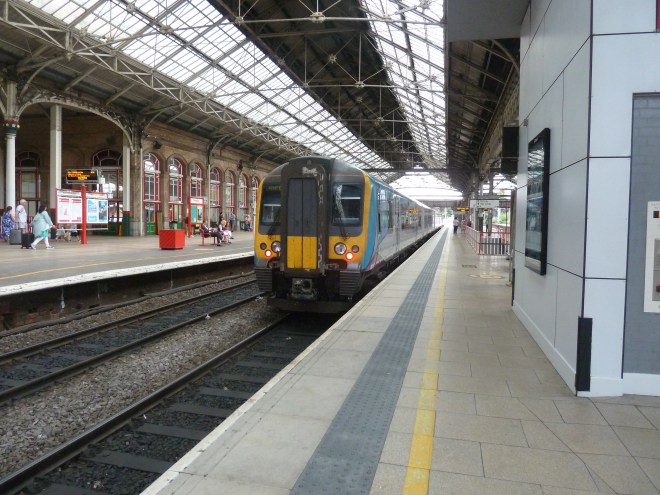
All this meant I had to change in Preston. The first two trains to the airport were full and standing, but I noticed an empty Tranpennine express train roll into platform 5, I took mu chances with that.

P1490278
My train from Preston to Manchester Airport.

Whilst waiting for the above train there was a short but very intense thunderstorm, with some spectaculat ligthning. My patience paid off, the train was half empty. There was a very slow journey through Manchester, which meant a 30 minute late arrival at the airport. All in all a bit frustrating at times. On the other hand, it was the hottest day of the year: the air con worked on the trains and I did get a seat!

St Bede of Jarrow

St Bede
St Bede

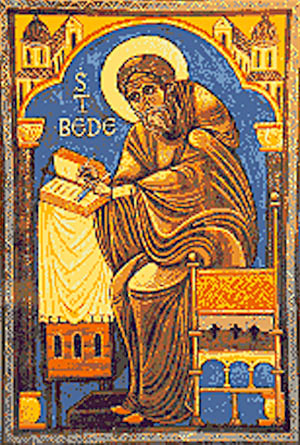
Today markes the feast of St Bede you can find a brief biography here .

In many respects he was a remarkable man. His most famous work is his History of Britain. It’s importance and influence cannot be overstated, with out it we would know vitrually nothing about the early history of our island. What is often over looked is his interest in Chronology  – he is mainly responsible for the term Anno Domini or more to the point the year 2019 is based on his work.

He was also a man of faith and this is clearly shown in all his works. He used his talents for the edification of others and for the benefit of the church